Discipleship is… a Crucified Life
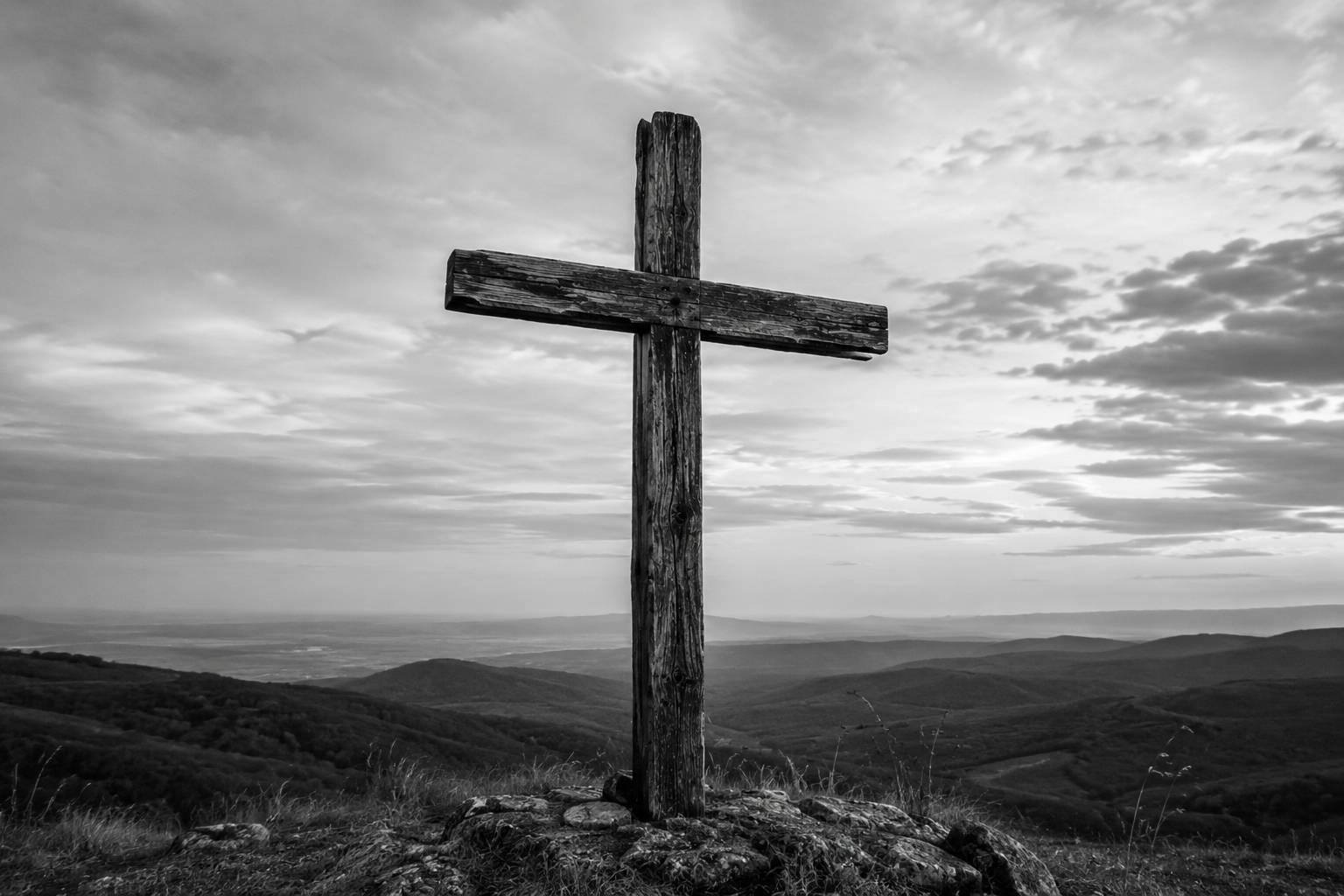
The primary symbol of the Christian faith is a method of execution.
We would not typically celebrate an electric chair, firing squad, or lethal injection. Yet believers identify with, embrace, and display just that: a cross. Two planks of splintered wood standing in the sun, awaiting the next victim of Roman punishment.
Crucifixion.
That gruesome way in which criminals were killed. Brutal. Torturous. Humiliating.
Perhaps this is why Peter attempted to steer Jesus in a different direction when the Master revealed His identity and the nature of His mission. Peter did not want his friend, teacher, and Lord to walk the road to the cross.
It must have been shocking to hear Jesus confirm His divinity and then reveal the method of accomplishing humanity’s salvation.
Even more shocking was his next statement:
“Deny yourself, take up your cross, and follow me.”
Jesus’ instruction to Peter defines the essence of Christian discipleship. Not only would Jesus be going to a cross, but in some way all believers would carry their own. Three brief phrases describe what it looks like to be faithful to Christ.
Deny yourself.
Perhaps the simplest way to describe the crucified life is the word “no.”
Faithfully following Jesus requires a denial of ourselves, of what Scripture calls the flesh. It is that part of us that will not be satisfied, hungers for more, and knows not contentment. It is those passions that wage war within us as we seek to be faithful to the way.
And we must say no.
No to what others would call success, to values that do not align with the kingdom of God, to ways of thinking that pull us off the path. No to our own desires; to people, places, and activities that take us away from our calling in Christ.
But the Christian life is not simply marked with many “No’s.” It also requires “yes’s.” For Jesus follows this command of self-denial with the invitation to take up our own cross.
Take up your cross.
To be clear, this is not a call to self-harm. Christ’s call is not to asceticism, or some twisted view of self-inflicted abuse. It is, though, a reminder of the reality that the Christian life includes suffering and surrender.
Taking up our cross involves enduring trials of various kinds, decisions in which we must decrease, and seasons of pruning. It includes times where we feel that death reigns in our mortal bodies, seasons when we feel burdened beyond our own strength, and those hours when we are overcome with the sobering reality of our own weakness.
“And those who belong to Christ Jesus have crucified the flesh with its passions and desires.”
Follow me.
Jesus understood that the mission would lead him to a cross. He knew that the redemption of humanity required a holy sacrifice. And while that work is finished, the invitation still stands for us to follow Christ down the path on which he leads.
Following Jesus is the essence of the Christian life. It is choosing His way over our own. Following is an act of faith, demonstrating our belief that he knows better than we do, and a trust in his guiding hand.
Yet the cross is not the climax.
Like the cross of Christ, our own journey into the crucified life is not our final destination. It is the path on which we travel to arrive at new life.
The inverted truth of the gospel is that we die in order to live, believing that God overcame the grave to deliver us through death into new life. For the believer, old things can pass away and all things become new.
But this new life cannot be obtained without an abandoning of the old.
Every believer eventually encounters moments that require a choice between self-preservation and faithful obedience. Those who seek to save their lives will lose. Those who forfeit the world’s game will win.
Deny Yourself.
Take Up Your Cross.
Follow Me.
And the result is resurrection power.